

Perseid Meteor Shower 2030
Meteor Shower
The Perseid meteor shower originates from Comet Swift-Tuttle. The comet was discovered in 1862.
As this comet travels close to the Sun, it leaves behind a trail of debris: small meteoroids spread out in space that cross Earth’s orbit. As Earth moves around the Sun, it passes through this stream of debris at certain times each year. When these particles enter Earth’s atmosphere at very high speed, they heat up through friction with the air and burn, creating the streaks of light we call meteors.
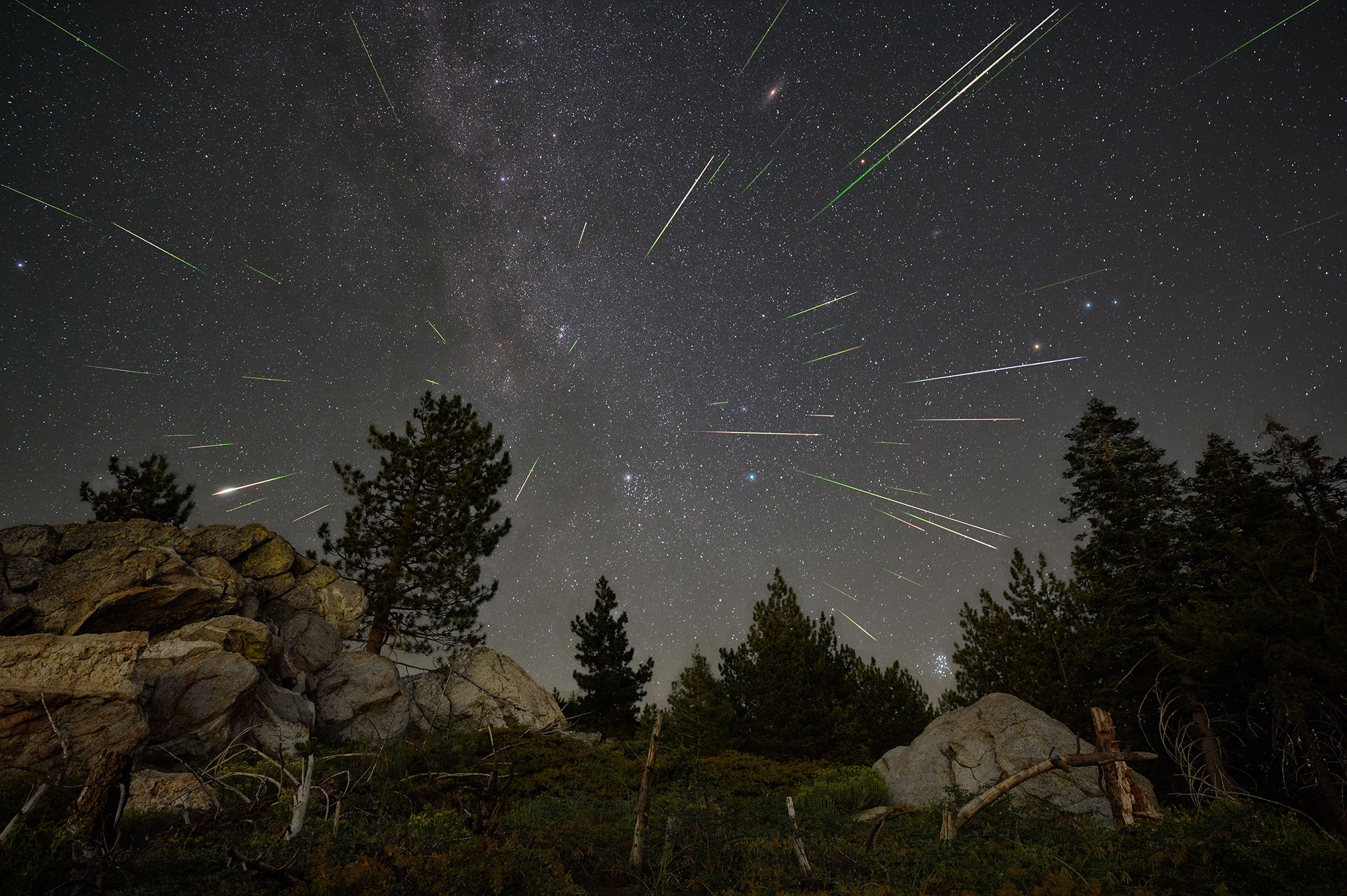
The Perseids are active from July 17 – August 24, 2030, peaking on the night of August 12 and the morning of August 13 with up to 110 meteors per hour under ideal conditions.
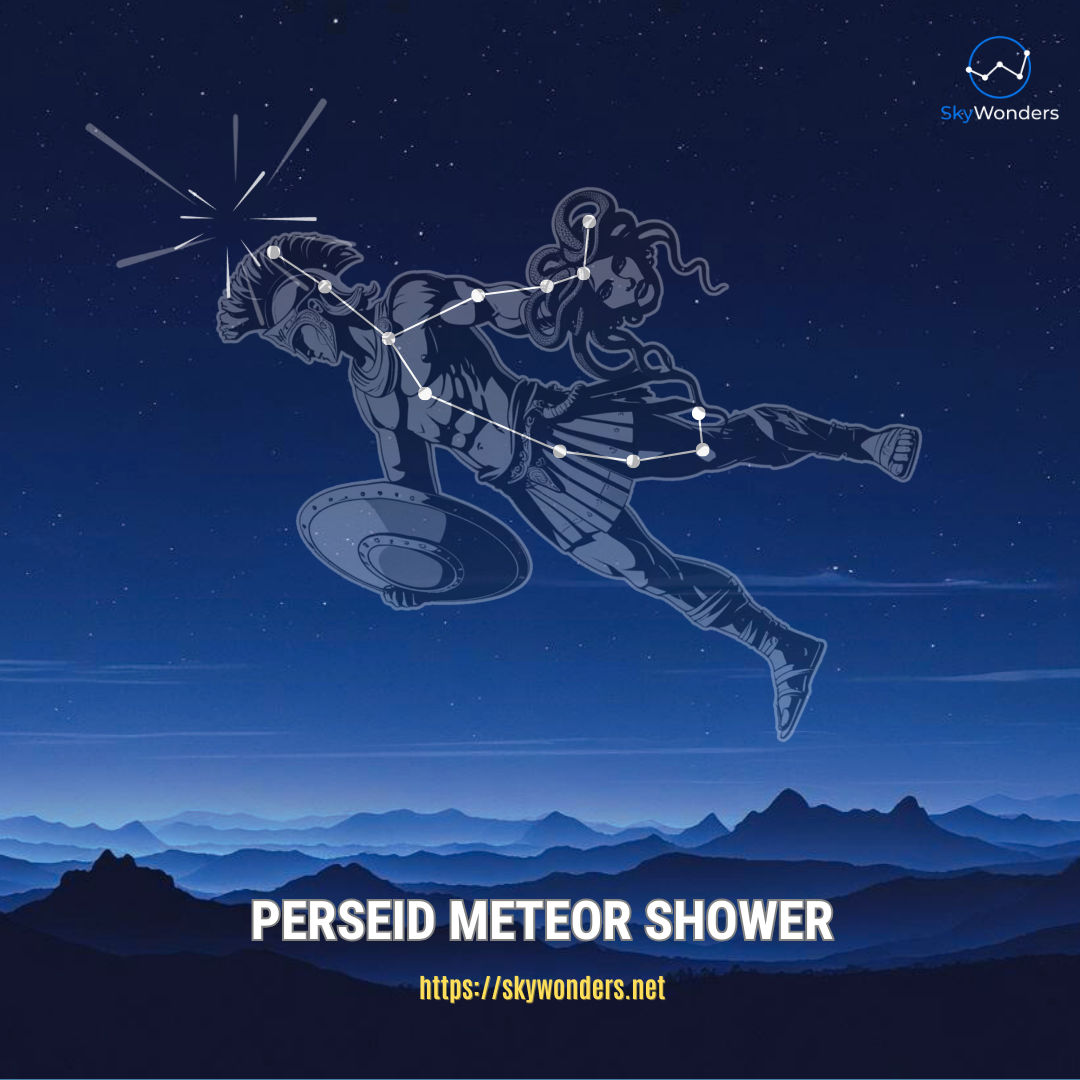
This meteor shower is best observed if you are patient and watch from after midnight until just before dawn, from a dark location far from city lights. You don’t need special equipment such as a telescope or binoculars, just your naked eyes and good weather! The radiant of this meteor shower is in the constellation Perseus, but meteors can appear anywhere in the sky.